What this treatment addresses
Skin concerns we address

Dryness & Dehydration
Actives worked in during the session

Sensitive Skin
A barrier-focused protocol exists for this

Dullness
Surface build-up addressed by hand

Congestion
Extraction where it is appropriate, not by default

Eye Area
Three levels, including a device-based option

Between Clinical Treatments
Keeps skin comfortable across a laser or RF course
Facials
Your physician confirms the plan and its cost during your consultation. No pressure.
Not sure where to start? Your first visit is $88 nett — includes doctor's assessment, skin analysis and a first treatment.
Message us on WhatsApp and our team will arrange your visit. You can also call us at (+65) 8014 8552 for booking or any enquiries.
Operating hours: 10:30am–8pm daily
- Doctor’s assessment prior to treatment
- MOH-licensed medical clinic
- Tang Plaza, Orchard
- Transparent Pricing
Maintenance treatments assessed by our doctor and performed by our trained therapists, designed to complement our medical treatments.
Three therapist-delivered lines — a professional skincare programme, a polynucleotide facial line, and dedicated eye protocols.
- Suited To
- Regular maintenance|Sensitive or stressed skin|Care between medical treatments|Eye-area routines
- Technology
- Professional cosmeceutical & polynucleotide facial lines
- Downtime
- None
- Sensations
- Massage pressure and warmth|Designed to be restful
- Performed By
- Therapist (doctor-directed)
- Sessions
- Monthly, commonly as a course of 6
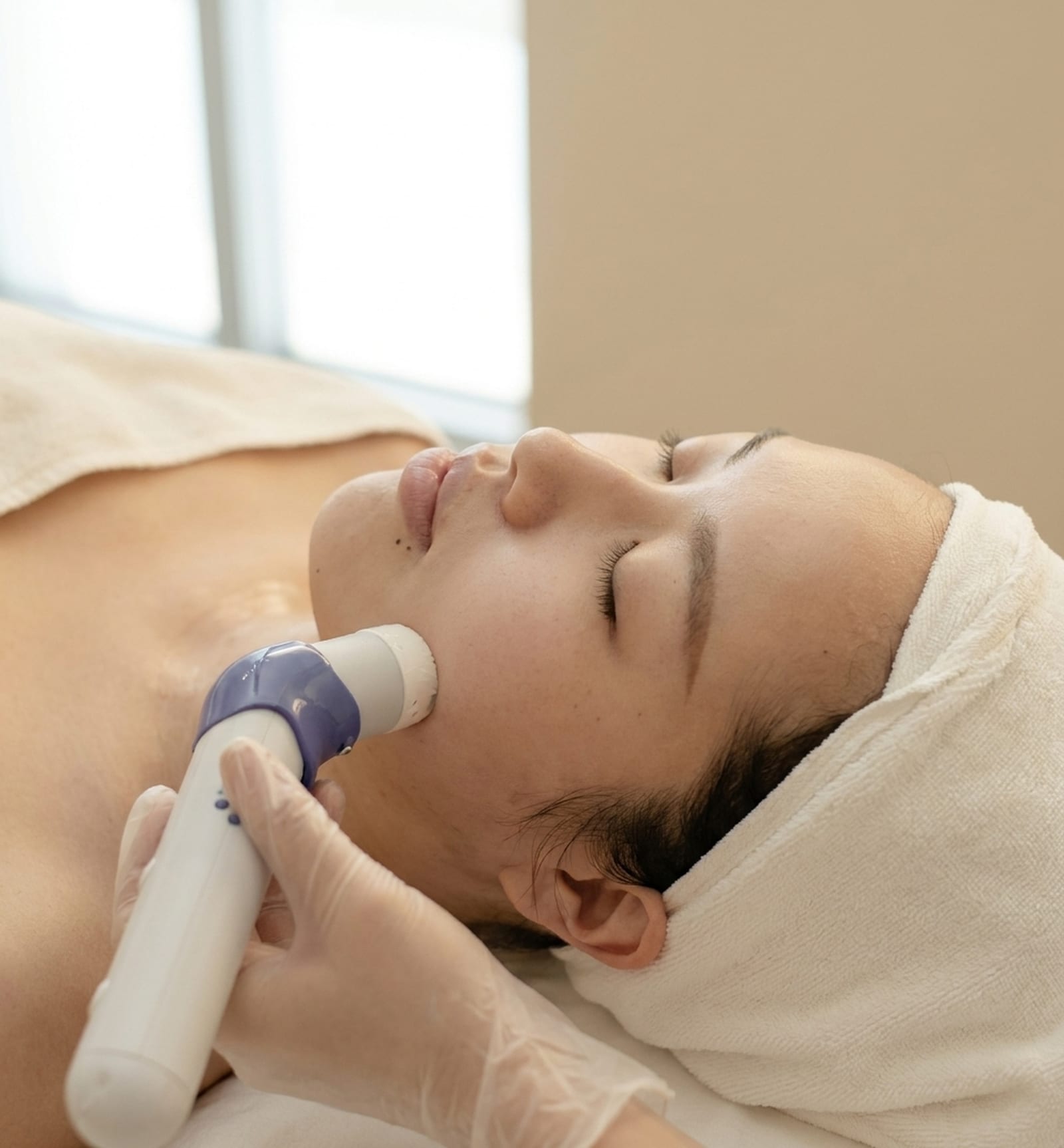
A clinic facial is a sequence worked by hand: cleansing, exfoliation, extraction where it is appropriate rather than by default, massage, a mask, and actives at professional strength. Our therapists perform it under the doctor's direction. What it changes is the condition of your skin — how it feels, how hydrated it is, how evenly it reflects light. It does not change the structure underneath.
The first line is a professional skincare programme with five protocols. They differ by aim rather than by rank: radiance, hydration, barrier repair, firming, and one directed at mature skin. The last of those has the most steps in it, which is not the same as being the one your skin calls for — the therapist selects on the day, from what your skin is doing rather than from a tier list. The programme runs on a professional cosmeceutical line (Skeyndor).
The second line is a polynucleotide facial in three versions — hydrating, calming and brightening. Polynucleotide fragments are applied and worked into the skin during the session rather than injected. That distinction is the important one: a topical route does not reach the depth an injected skin booster reaches, and the two are not the same treatment in two formats. If what you want is the effect of an injected booster, this is not an equivalent substitute, and we would rather say so on the page than after you have booked.
The third line is the eye area, at three levels: a straightforward eye treatment, a protocol aimed at dark circles and puffiness, and a device-based option that belongs to the same HydraFacial family. What none of the three can do is change a dark circle caused by a hollow beneath the eye, or by pigment sitting in the skin. Those are a volume problem and a pigment problem, and they are addressed by other treatments or, in some cases, not at all.
Against the other treatments in this category the dividing line is who does the work and how the session is decided. A HydraFacial runs a standardised device sequence — the same steps in the same order every time, which is what makes it reproducible. A facial is worked by hand and the protocol is set on the day. A peel is exfoliation by acid rather than conditioning by hand. People who have several of them commonly alternate rather than choose one.
- This is a maintenance treatment. It does not treat scarring, established pigmentation or laxity — those need clinical treatments, and we will say so rather than book you a course of facials instead.
- Redness, or small marks where extraction was done, can last from a few hours to about a day.
- Tell us beforehand if your skin is sensitive or your barrier is already compromised. Adding more exfoliation to a damaged barrier makes it worse, which is precisely why a barrier-repair protocol exists.
- The change is visible after a single session and it is short-lived. What moves is the condition of your skin, not its structure.
- A topical polynucleotide facial is not an injected skin booster. Different route, different depth, different order of effect.
- Dark circles that come from a hollow or from pigment are not solved by any eye treatment, ours included.
- Not every facial belongs in the same week as a laser, a peel or microneedling. We schedule facials around your clinical course rather than the other way round.
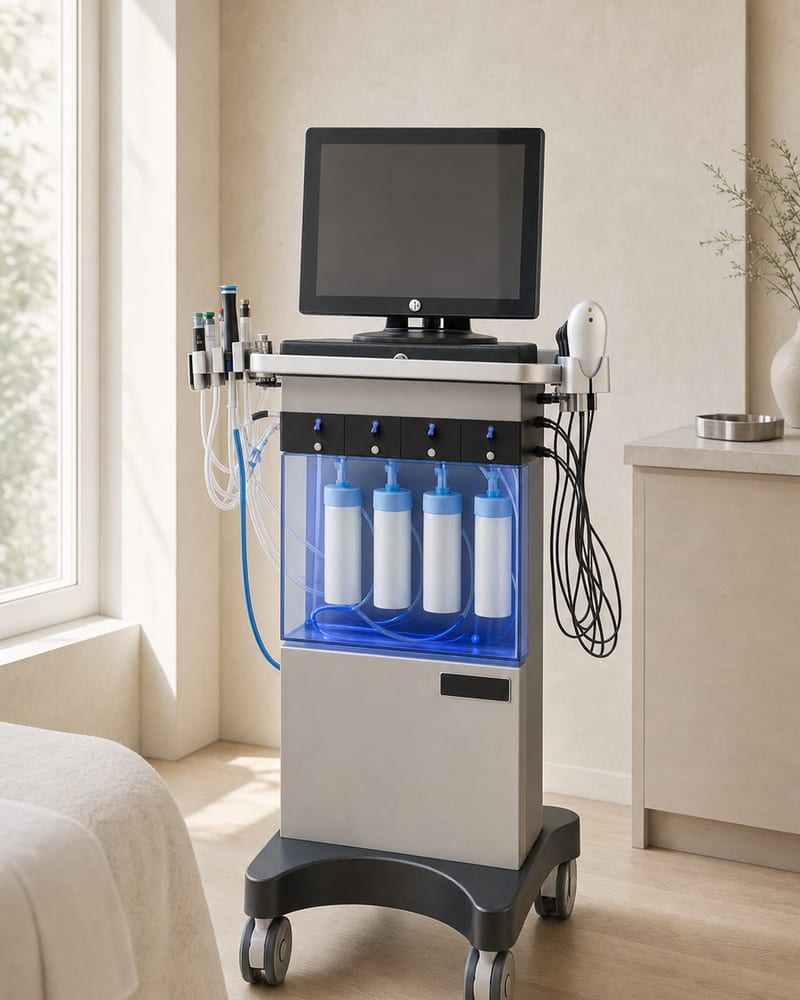
The HydraFacial is device-driven. A vortex tip runs a standardised sequence — the same steps in the same order — which is what makes it reproducible and why it leaves nothing to recover from. Cleansing and extraction are where it does most of its work.
A facial here is worked by hand. The protocol is chosen on the day from what your skin is doing, the session runs longer, and the massage and mask are substantive steps rather than a finish. Conditioning and comfort are where it does most of its work.
People who have both usually alternate between them. They are not two versions of one thing, so it is not generally a choice of one or the other.
It is settled at your appointment, from what your skin is doing that day, rather than picked in advance from a list.
- Radiance — where skin reads dull and uneven.
- Hydration — where skin is dehydrated rather than short of oil.
- Barrier repair — where skin is reactive, stinging or over-exfoliated.
- Firming — where the aim is tone rather than surface condition.
- Age-focused — the protocol with the most steps in it.
No. Both use polynucleotide preparations, but this one is applied to the skin during a facial, while an injected booster is placed into the dermis with a needle. The route sets the depth, and the depth sets how much of an effect there is to expect.
This is the gentler of the two and there is nothing to recover from. It is also the smaller effect. Preferring it because you would rather avoid needles is a legitimate reason — we only want the decision made knowing the two are not equivalent.
Usually yes, and sometimes that is the point of them. A course of energy-based treatment can leave skin dry or reactive between sessions, and a conditioning facial is a reasonable way to keep it comfortable in the meantime.
Scheduling matters more than the answer does. Some facials are not appropriate in the same week as a laser, a peel or microneedling, so we plan them around your clinical sessions. Tell us what else you are having, including anything you are having elsewhere.
Your consultation will determine this. Skin type, medical history, medications and the changes you would like to see all affect which treatment is appropriate, and whether any treatment is suitable at all.
If a treatment isn't suitable for you, you'll be informed.
Every plan is assessed by our doctor. Treatments that require a doctor are performed by the doctor; treatments that may be delegated are performed by trained therapists under the doctor's direction. We will tell you which applies before you book.
Your first visit includes a consultation where the doctor examines your skin and determines if this treatment is suitable for you before proceeding with any procedures. You don’t need to book the consultation separately.
If you prefer to come in solely for an assessment, our consultation charge is $80. However, if you decide to proceed with treatment on the same day, this fee will be waived.
The doctor will examine your skin, take your medical history and give you a detailed account of your skin condition, which may differ from your initial expectations.
You leave with a written plan and the associated costs. If a treatment isn’t suitable for you, you’ll be informed of that instead.
There’s no same-day price or deadline attached to the plan. Prices don’t change based on when you decide.
The plan is yours to keep. If you’d like more time to consider or make comparisons, that’s perfectly fine. We respect every customer’s decisions.