What this treatment addresses
Skin concerns we address

Acne Scars
The ablative route for indented scarring

Skin Texture
Works the surface as a whole, not one mark

Enlarged Pores
Addresses the collagen around the opening

Fine Lines & Crepiness
Prompts collagen remodelling over months

Sun-Damaged Surface
Rough, weathered texture from cumulative exposure
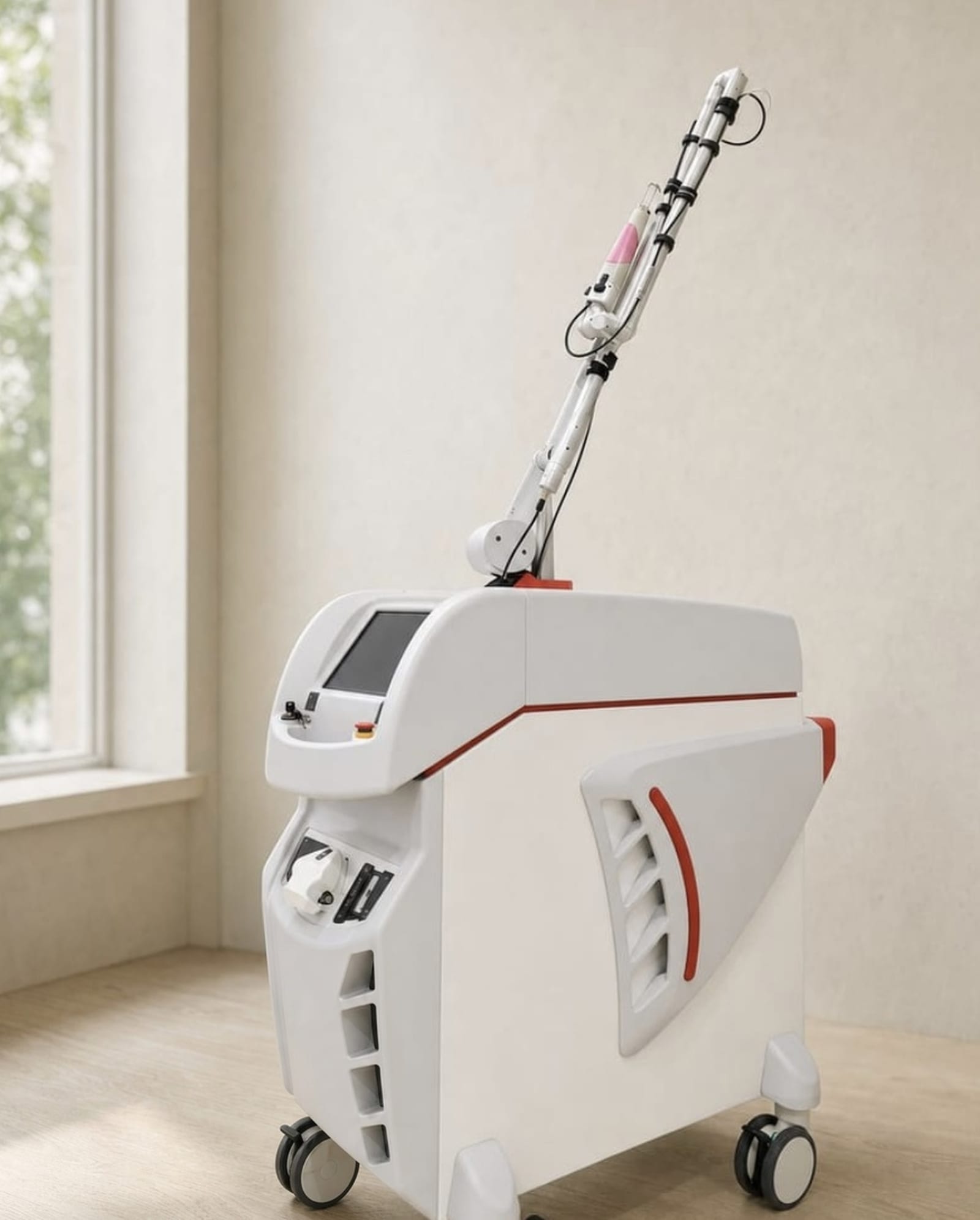
CO₂ Fractional Laser
Your physician confirms the plan and its cost during your consultation. No pressure.
Not sure where to start? Your first visit is $88 nett — includes doctor's assessment, skin analysis and a first treatment.
Message us on WhatsApp and our team will arrange your visit. You can also call us at (+65) 8014 8552 for booking or any enquiries.
Operating hours: 10:30am–8pm daily
- Doctor’s assessment prior to treatment
- MOH-licensed medical clinic
- Tang Plaza, Orchard
- Transparent Pricing
A deeper resurfacing treatment with planned downtime, recommended only after a doctor's assessment when significant texture improvement is the goal.
An ablative fractional laser removes microscopic columns of skin and lets the untreated skin between them drive fast healing. It carries the longest recovery of any laser we run.
- Suited To
- Pitted acne scars|Pronounced texture|Enlarged pores — where downtime is acceptable
- Technology
- Fractional CO₂ laser, 10,600 nm
- Downtime
- Staged rather than a single number — the expected sequence for your own settings is given to you before you book
- Sensations
- Numbing first; heat and pinpricks during|A sunburn-like feeling afterwards, with visible recovery days
- Performed By
- Doctor
- Sessions
- Planned as a course, commonly five sessions, with the interval set by how the previous session healed
The CO₂ laser emits at 10,600 nm, a wavelength strongly absorbed by water. Skin is largely water, so the energy is taken up where it lands and vaporises that tissue rather than passing through it. That is what ablative means, and it is a different physical event from the picosecond laser, which acts on pigment particles by pressure and leaves the surface intact.
Fractional delivery divides the beam into an array of narrow columns. Each column passes through the epidermis and into the dermis, and the skin between the columns is left untouched. Repair runs sideways out of that untreated tissue, which is why a fractional pattern heals faster than resurfacing an entire surface at once — and why coverage, not intensity alone, is what governs how long you will be recovering.
Two parameters are set independently. Depth is the energy each column carries. Density is how much of the surface those columns cover. Higher coverage does more in one session and asks for a longer recovery in return. The doctor sets both against your skin type and the area being treated; this is not one fixed strength that everybody receives.
It is planned as a course rather than a single visit, commonly five sessions. The interval is set by how your skin healed from the session before it rather than by a fixed calendar, which is why the next appointment is made after we have seen the last one settle.
- The emission wavelength is 10,600 nm and water is the absorbing chromophore. That is why the effect is vaporisation of tissue rather than selective heating of pigment.
- Fractional delivery treats a proportion of the surface rather than all of it. The untreated skin between the columns is the reservoir the repair works outward from.
- Depth and coverage are separate settings, so two areas treated in the same session can be treated at different intensities.
- This is the treatment on this site with the most real recovery attached to it. Do not book it before a wedding, a holiday, a shoot or a work trip — plan the event around the laser rather than the other way round.
- Skin with more pigment is more likely to respond to ablative injury with post-inflammatory hyperpigmentation, meaning new pigment that arrives after the treatment. It usually settles, but in months rather than weeks, which is why we use conservative settings and sometimes suggest a preparation period before the first session.
- For some skin, our answer is that we would not use this laser at all. That is a real outcome of the assessment, not a formality.
- Melasma is one of those cases. Ablative resurfacing can make it worse, so we do not treat it with this laser and we will say so rather than take the booking.
- Strict sun protection afterwards is not a line at the bottom of a leaflet. Newly healed skin pigments easily, and how carefully you protect it is one of the variables that decides what the result looks like.
- We do not resurface skin where acne is still active. Treating scars while new lesions are still forming produces new scars alongside the ones being treated.
- Tell us if you have taken oral retinoid medication for acne. It affects how skin heals after an ablative treatment, so we ask about it at assessment and the timing is a judgement we make with you rather than a fixed rule.
- Treatment around the mouth can reactivate the cold sore virus in people who carry it. If that applies to you, tell us — preventive medication before the session is easier than an outbreak on healing skin.
- This is not the fractional setting on the picosecond laser under another name. The two work by different physics, and neither substitutes for the other.
The picosecond laser concentrates its energy into an array of high-energy points, but it stays photomechanical: it works by pressure, and the surface is largely left in place. Redness is the recovery. This laser vaporises columns of tissue, so there is a real if microscopic wound, and it goes through a healing sequence rather than simply fading.
They are not two strengths of one thing on a single scale. They are different mechanisms, and one does not stand in for the other. Which one your plan uses follows from what is being treated and how much recovery you can accept — both are here, so the recommendation can follow your skin rather than the equipment in the room.
More than anything else we offer, and it runs as a sequence rather than as a single figure. Coverage is what governs it: the more of the surface treated in one session, the longer the skin takes to settle.
Because this is the treatment you have to arrange a calendar around, you are given the expected sequence for your own settings before you book rather than on the day, and the doctor describes it in the clinic rather than leaving you to read a generic timeline. What we will not do is describe it in a way that makes it sound convenient.
Sometimes, and always with a lower threshold for caution. More pigment in the skin means a higher chance of post-inflammatory hyperpigmentation after any ablative treatment. That pigment usually resolves, but it is measured in months, and it is the main reason this laser is run conservatively on Asian skin.
In practice that means lower settings, sometimes a preparation period first, sun protection treated as part of the treatment rather than as aftercare advice, and occasionally the recommendation not to do it at all. If scarring is your concern and your skin is not a good candidate for ablative work, there are other routes and we would rather point you at one of those.
It is commonly planned as a course of five. That is a starting structure rather than a promise — the interval depends on how each session heals, and your skin may need more or fewer.
One session does something you can see. Scar remodelling, though, is collagen work: it carries on for months after the last session, so the point at which the result is fairly judged is well after you have stopped coming in.
Your consultation will determine this. Skin type, medical history, medications and the changes you would like to see all affect which treatment is appropriate, and whether any treatment is suitable at all.
If a treatment isn't suitable for you, you'll be informed.
Every plan is assessed by our doctor. Treatments that require a doctor are performed by the doctor; treatments that may be delegated are performed by trained therapists under the doctor's direction. We will tell you which applies before you book.
Your first visit includes a consultation where the doctor examines your skin and determines if this treatment is suitable for you before proceeding with any procedures. You don’t need to book the consultation separately.
If you prefer to come in solely for an assessment, our consultation charge is $80. However, if you decide to proceed with treatment on the same day, this fee will be waived.
The doctor will examine your skin, take your medical history and give you a detailed account of your skin condition, which may differ from your initial expectations.
You leave with a written plan and the associated costs. If a treatment isn’t suitable for you, you’ll be informed of that instead.
There’s no same-day price or deadline attached to the plan. Prices don’t change based on when you decide.
The plan is yours to keep. If you’d like more time to consider or make comparisons, that’s perfectly fine. We respect every customer’s decisions.